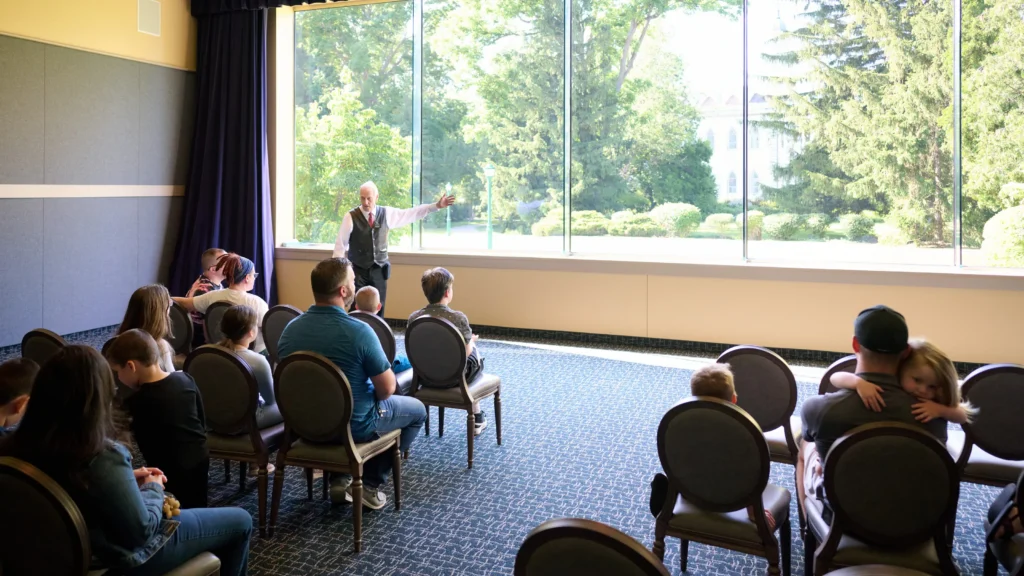
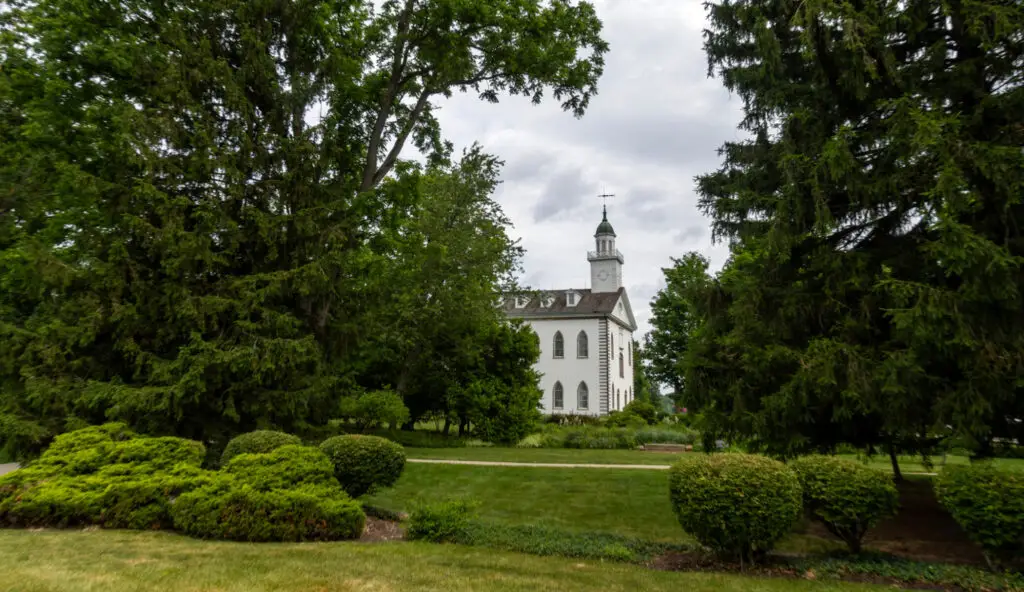
At the heart of the Kirtland Temple Visitors’ Center is one of the most breathtaking views in all of Church history. A massive picture window—nearly 11 feet tall and over 32 feet wide—frames the Kirtland Temple like a living painting, bathing the room in natural light and setting the tone for everything that follows. This is where every tour begins.
The missionaries leave the lights off in the room, and as the temple gleams through the window, visitors gather in quiet anticipation before heading inside.

Kirtland Temple framed by curtained windows
Natural light with a perfect view of the Kirtland Temple
The Visitors’ Center serves as your orientation point for the broader Historic Kirtland experience. Tours and exhibits are available year-round to share the experiences of early members of The Church of Jesus Christ of Latter-day Saints who gathered in Kirtland in the 1830s.
Tours begin at the Visitors’ Center and last approximately one hour, taking visitors to all three floors of the temple to learn about its construction and use in the 1830s. Tours begin around every half hour.
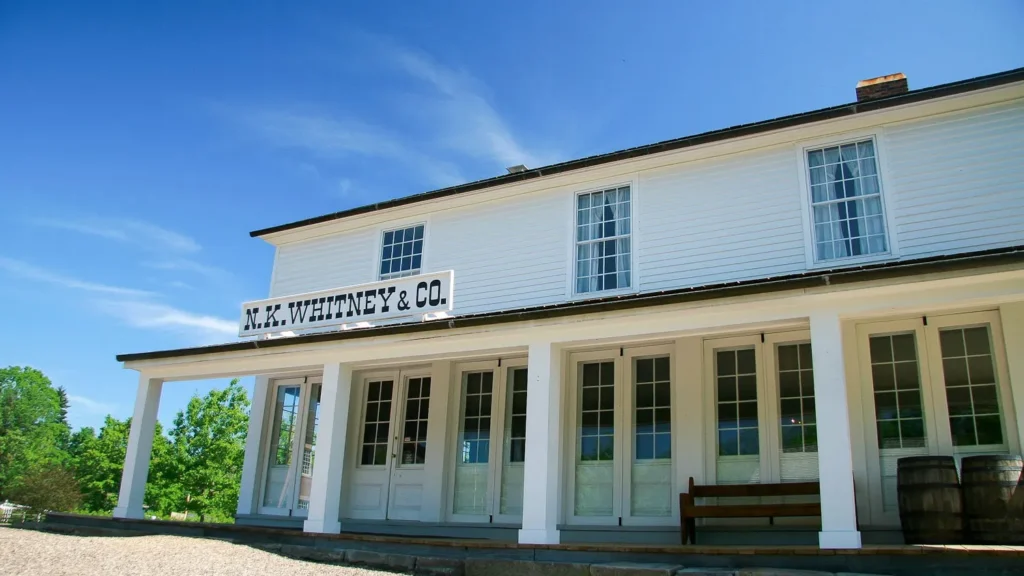
Visitors are invited to tour the N.K. Whitney & Co. Store, the Newel and Elizabeth Ann Whitney Home, the reconstructed N.K. Whitney Ashery, a replica sawmill, a schoolhouse, the John Johnson Inn, and the refurbished Joseph and Emma Smith Home.
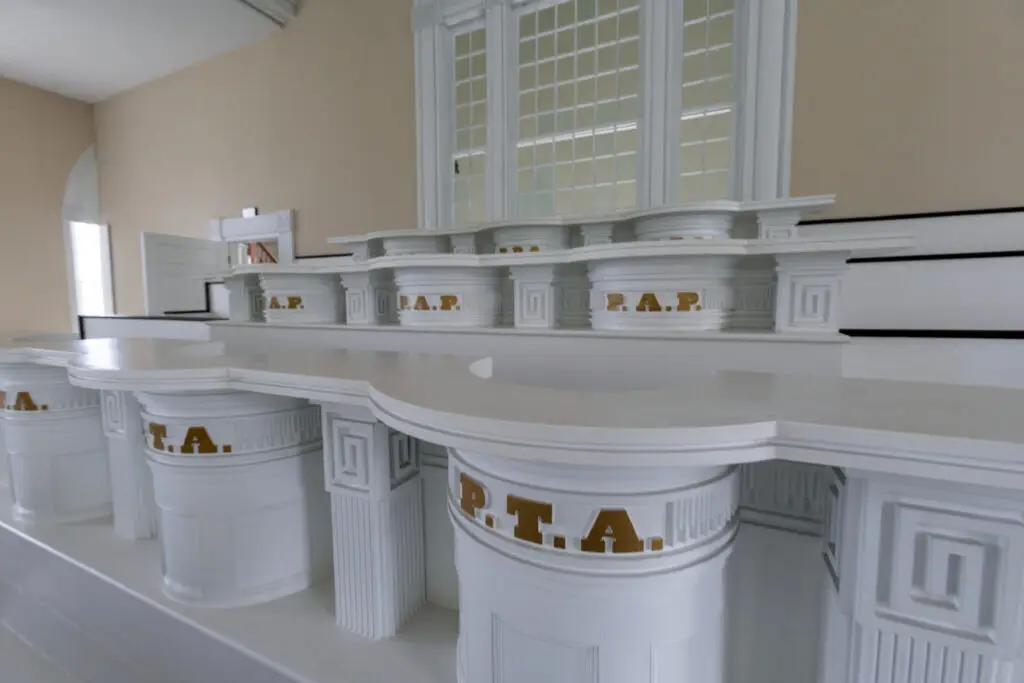
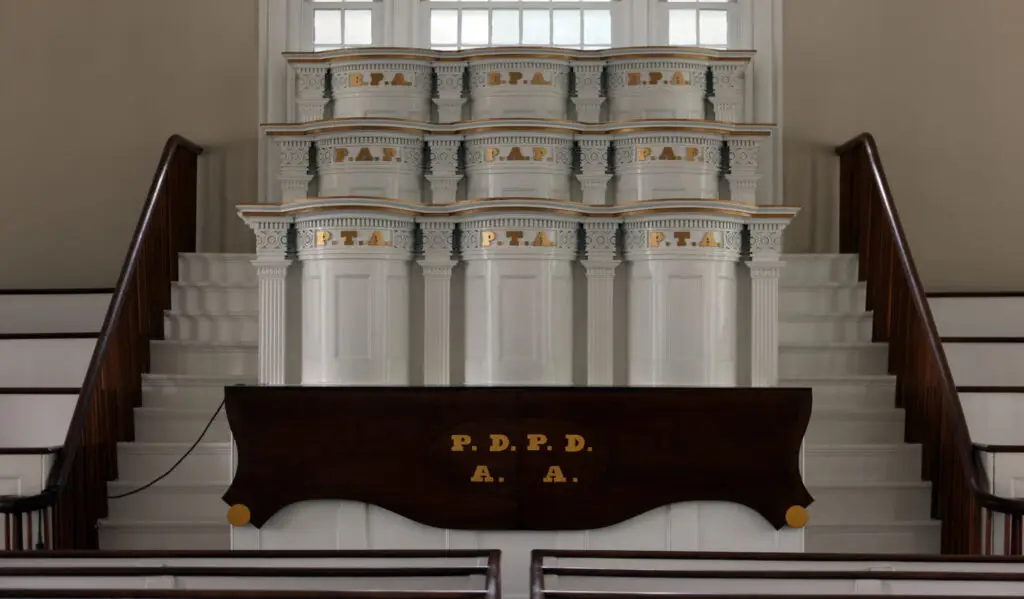
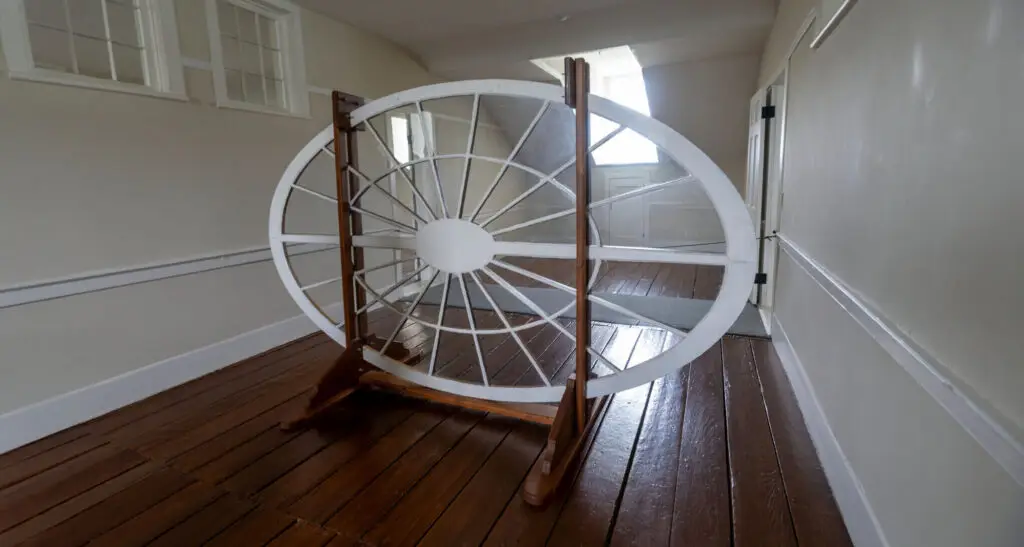
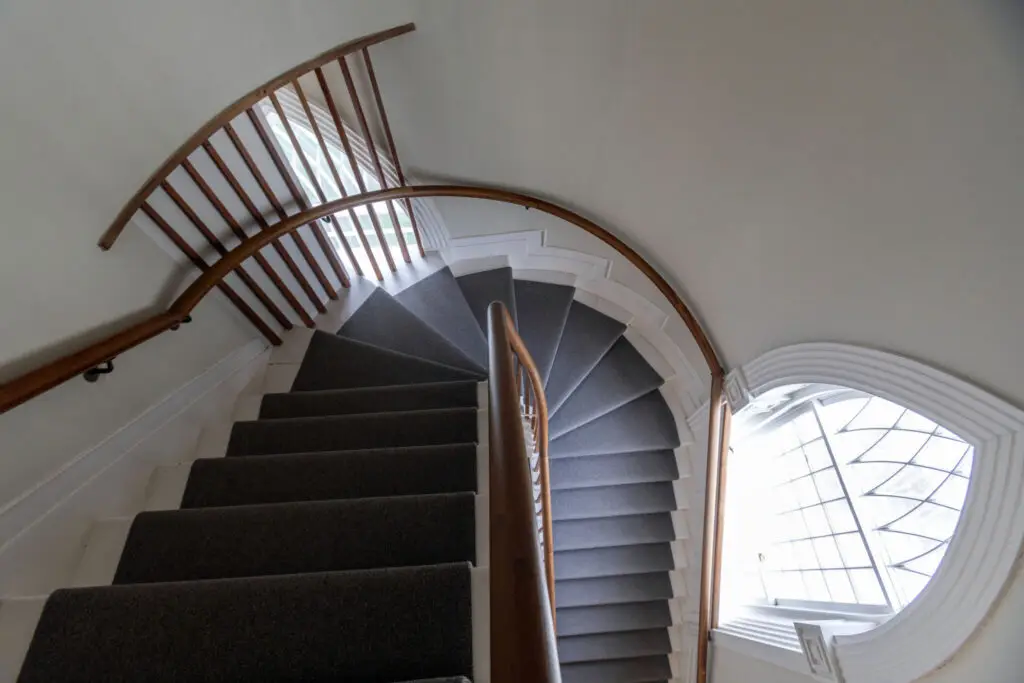
Among the treasures preserved inside the temple itself are Joseph Smith’s combination chair and tablet-arm desk, the original oval window frame built by Brigham Young and his brother Joseph Young, the original right-side handrails in the stairways, and the extraordinary original pulpits.
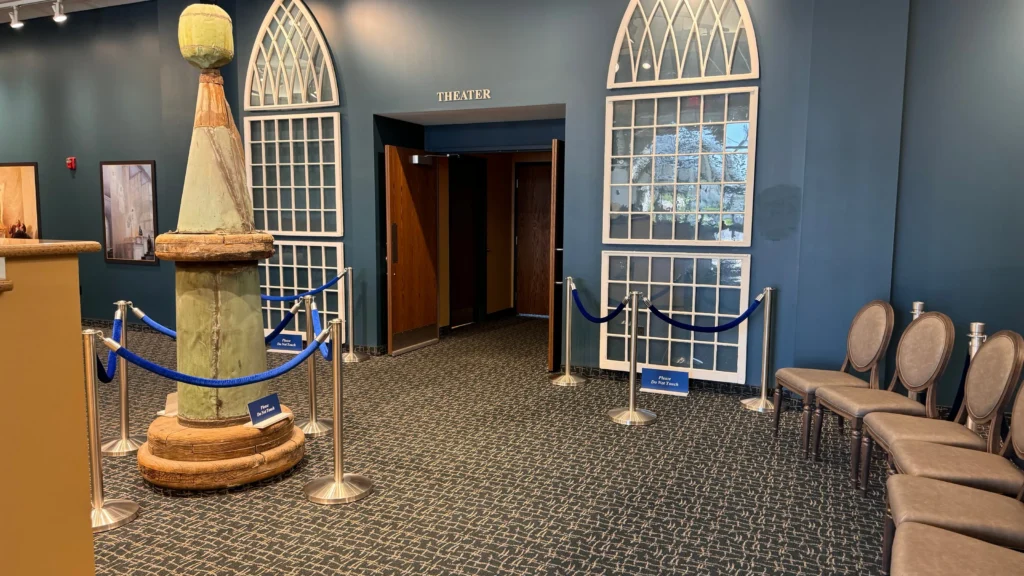
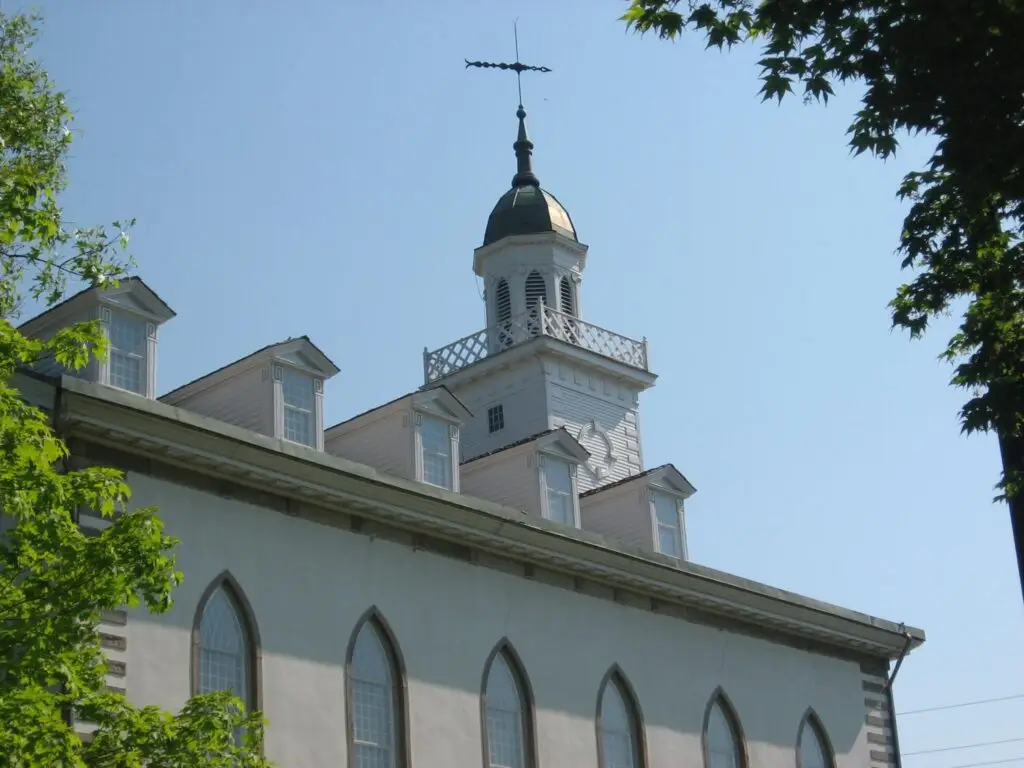
Weather-beaten and battered, the finial (spire capstone) bears the marks of extreme Ohio temperatures and generations of exposure to the elements. It was replaced with a reproduction in 1993. But its story is about more than architecture.
Wheelchair and stroller accessible, the Visitors’ Center and historic Kirtland walking tour are great for getting the most out of your visit to this sacred place.
Helpful volunteers are stationed throughout to add to your experience, give directions, and provide insights to questions.
Temples hold a special place in the faith and practice of Latter-day Saints around the world.
Much of the temple is original, including the floors and the famed, ornate pulpits on each end of the long first-floor hall. Two sets of elevated pulpits grace the main floor, representing the Melchizedek and Aaronic Priesthoods. The pews feature reversible benches so the congregation could face either set of pulpits. This is the room where Joseph Smith and Oliver Cowdery reported that the Savior appeared to them on April 3, 1836.
Among the original items preserved in the temple are Joseph Smith’s combination chair and tablet-arm desk, the original oval window frame built by Brigham Young and his brother Joseph Young, and the original right-side handrails in the stairways. Visitors are invited to use the left-side railings to help preserve the originals.
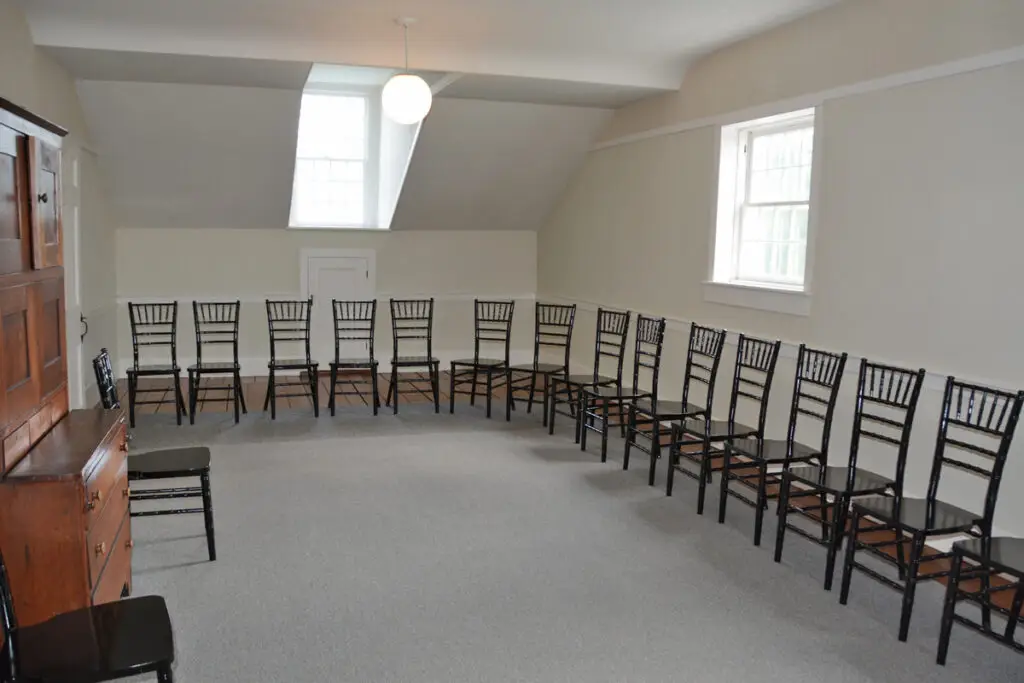
The third floor contained rooms for the Kirtland High School during the day and Church quorum meetings in the evening. Joseph Smith used the west third-floor room as his office. Tour groups are limited in size specifically to protect this upper room of the temple.
Photo (2025) by Kenneth Mays
From the moment you arrive, the spire draws your eye upward. Whether you glimpse it through the trees on your way in, see it framed in the great picture window of the Visitors’ Center, or stand beneath it on the temple grounds, there is something about it that stills you.
The temple has 66 super-steep steps to the top floor. Wear comfortable shoes, take your time, and let the missionaries set the pace. An alternative experience is available for those who cannot access the upper floors.
Photos can only capture so much. Come experience the peace, beauty, and inspiration of our exhibits for yourself—admission is always free.