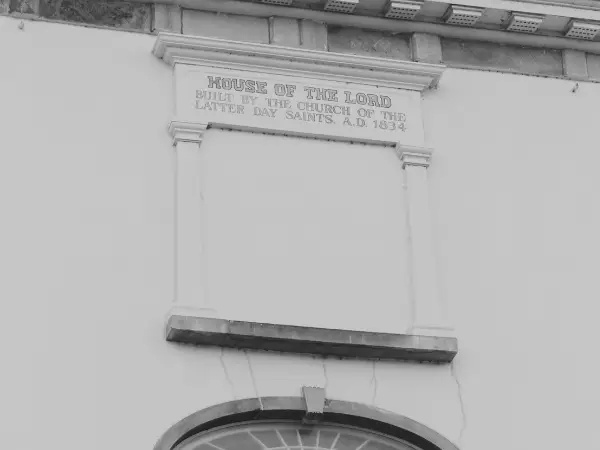
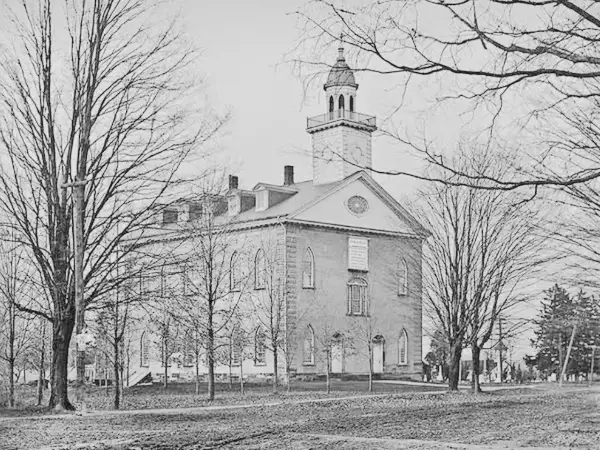
In December 1830, Joseph Smith said he received a revelation directing members of the faith to “assemble together in Ohio.” By 1831, members of the Church began to gather to the Kirtland area, forming a vibrant community of faith on the Ohio frontier.
On June 6, 1833, construction began on the Kirtland Temple. On July 23, 1833, the First Presidency—Joseph Smith, Sidney Rigdon, and Frederick G. Williams—presided at a cornerstone-laying ceremony. The Saints were so impoverished at this time that “there was not a scraper and hardly a plow that could be obtained.” Nevertheless, their unity, harmony, and charity strengthened them to fulfill the commandment of God.
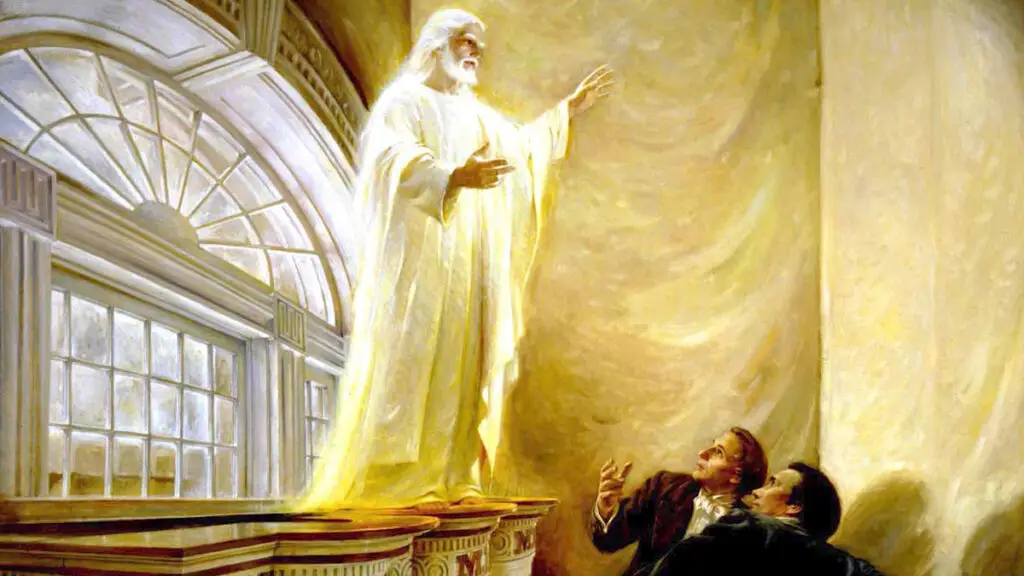
The dedication on March 27, 1836, was attended by approximately 1,000 people and included the Hosanna Shout. Reports of visions, spiritual experiences, and the restoration of priesthood keys through ancient prophets Moses, Elias, and Elijah were documented and later canonized in Section 110 of the Doctrine and Covenants. One week later, the Savior appeared to Joseph Smith and Oliver Cowdery and accepted the temple as His house.
In 1880, Community of Christ (formerly known as the Reorganized Church of Jesus Christ of Latter Day Saints) reestablished ownership of the Kirtland Temple and restored it as closely as possible to its original condition. It remained under their careful stewardship for 144 years.
On March 5, 2024, ownership of the Kirtland Temple was transferred from Community of Christ to The Church of Jesus Christ of Latter-day Saints. The building was closed for 20 days to prepare it for reopening to public tours on March 25, 2024. Today, missionary guides lead thousands of visitors through its sacred halls each year.
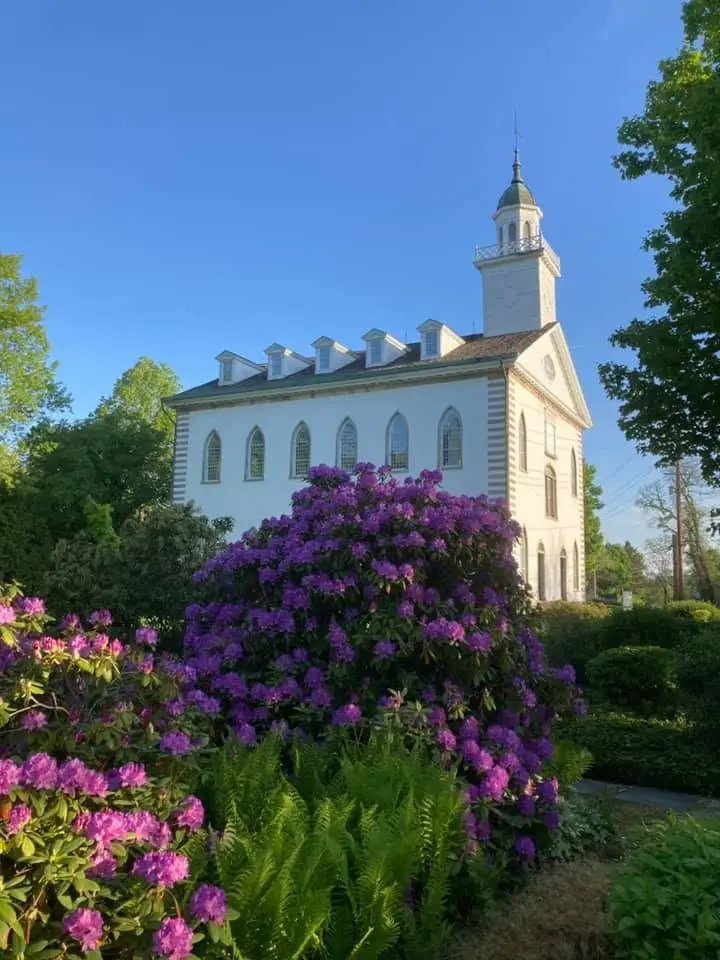
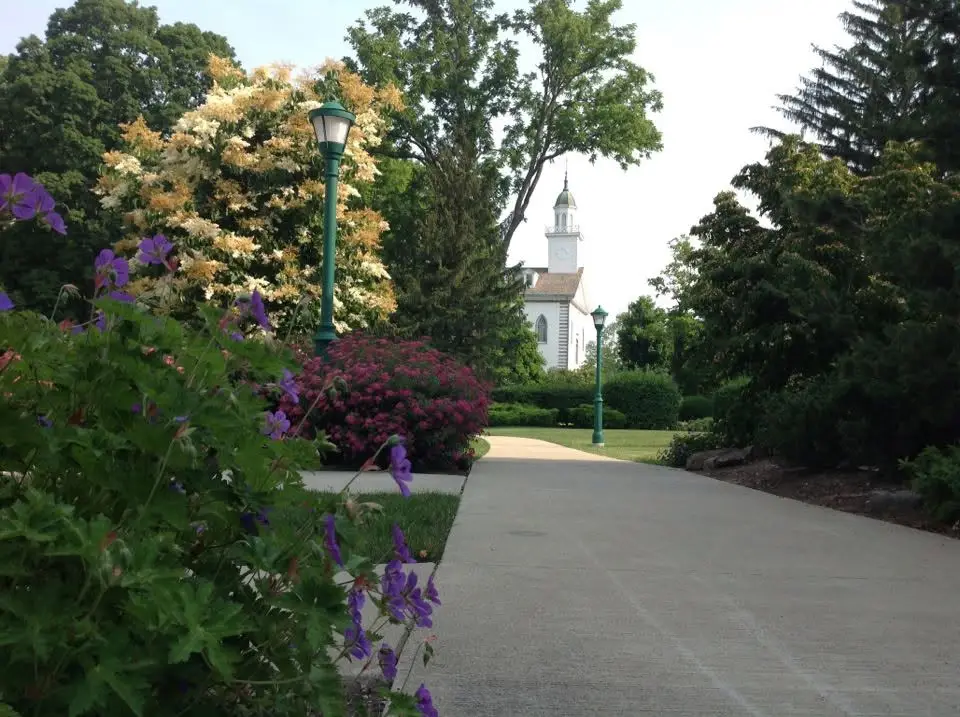
The Kirtland Temple continues to welcome visitors of all backgrounds to its grounds and Visitors’ Center to learn, reflect, and find peace. It was added to the National Register of Historic Places in 1969 and named a National Historic Landmark in 1977.
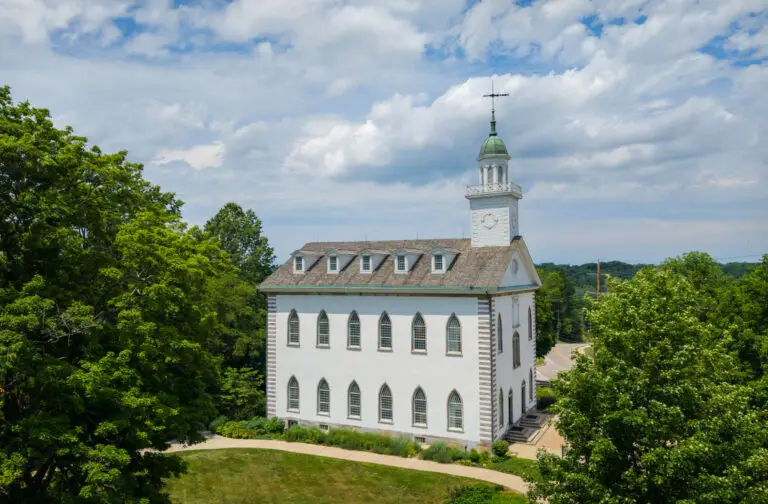
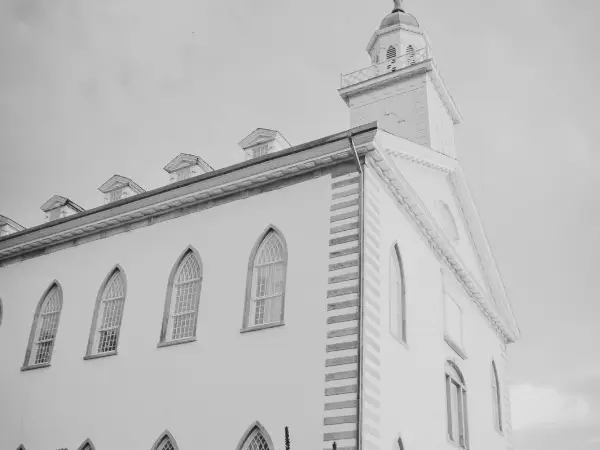
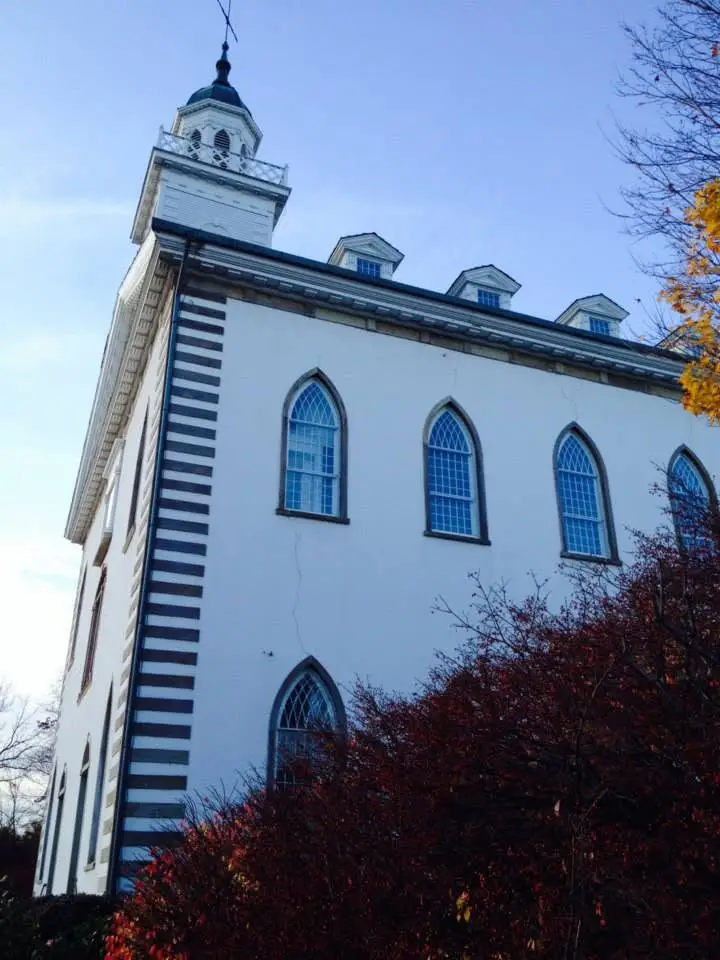
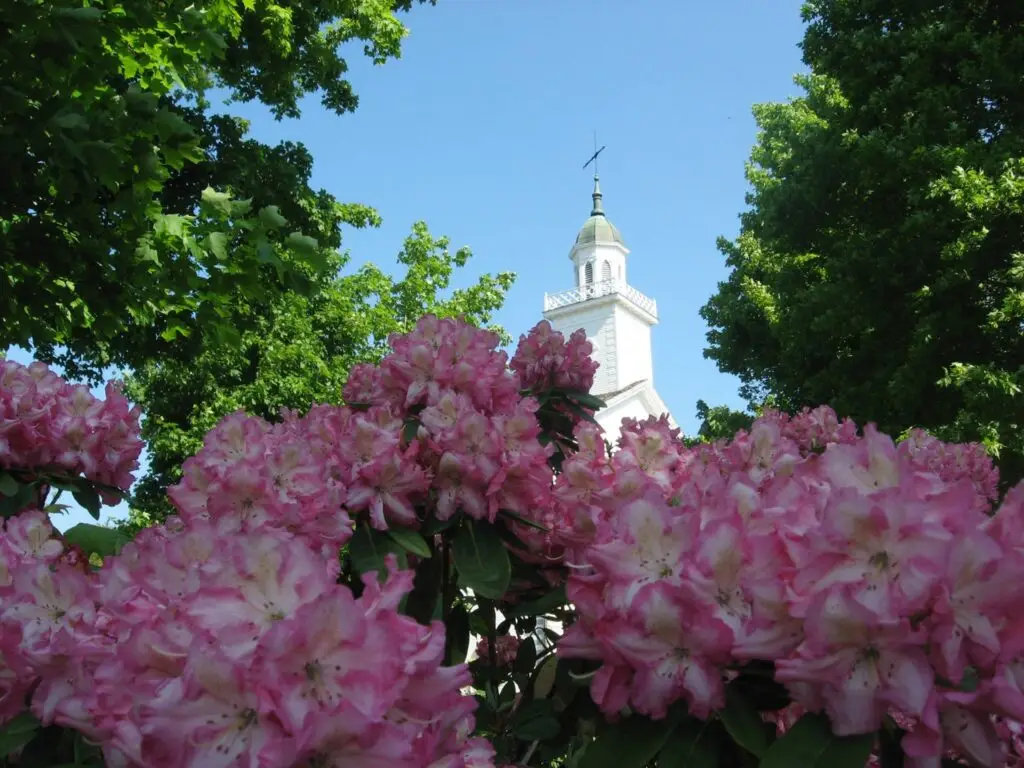
Perched on a hilltop overlooking the Chagrin River Valley, the Kirtland Temple is a blend of classical and Gothic Revival styles. Typical of period houses of worship and reflecting the New England roots of its builders, the temple is rectangular in plan with a centered, prominent bell tower.
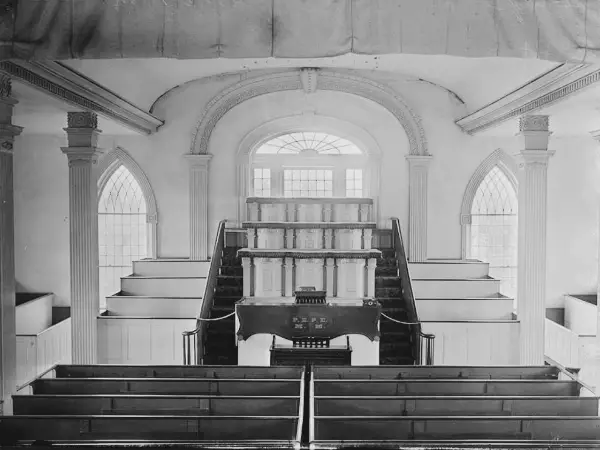
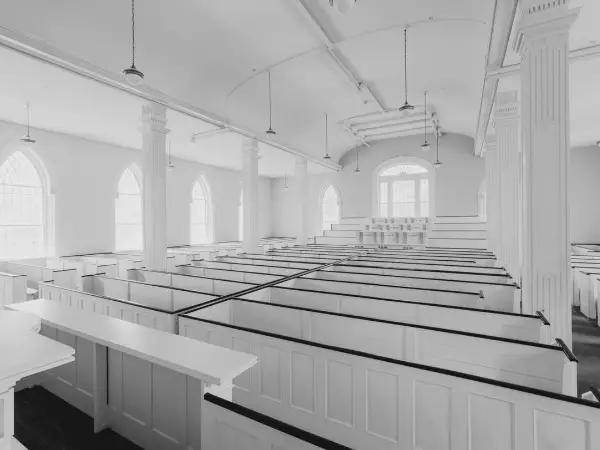
The design was received by revelation. Joseph Smith, Sidney Rigdon, and Frederick G. Williams knelt in prayer and each saw a vision of the exterior and interior elements of the future temple—allowing them to draw architectural plans for the House of the Lord. Builder Truman O. Angell and plasterer Brigham Young were among those who gave skilled labor to bring the vision to life.
Temples hold a special place in the faith and practice of Latter-day Saints around the world.
Temples are considered the most sacred spaces on earth—places where heaven and earth feel close together.
Marriages and family bonds are sealed for eternity, reflecting the belief that family relationships continue beyond this life.
A place to step away from the world, seek guidance, and find clarity through prayer and quiet reflection.
Everything about the temple points the heart and mind to Jesus Christ, the Son of God—who appeared in this very building on April 3, 1836.
One thing I ask from the Lord, this only do I seek: that I may dwell in the house of the Lord all the days of my life, to gaze on the beauty of the Lord and to seek him in his temple.
– Psalm 27:4
The temple grounds and Visitors’ Center are open to all. Come see this historic landmark and discover why it’s touched so many lives.